Round
Round Oval
Oval Emerald Cut
 Marquise
 Pear
Pear Rose Cut
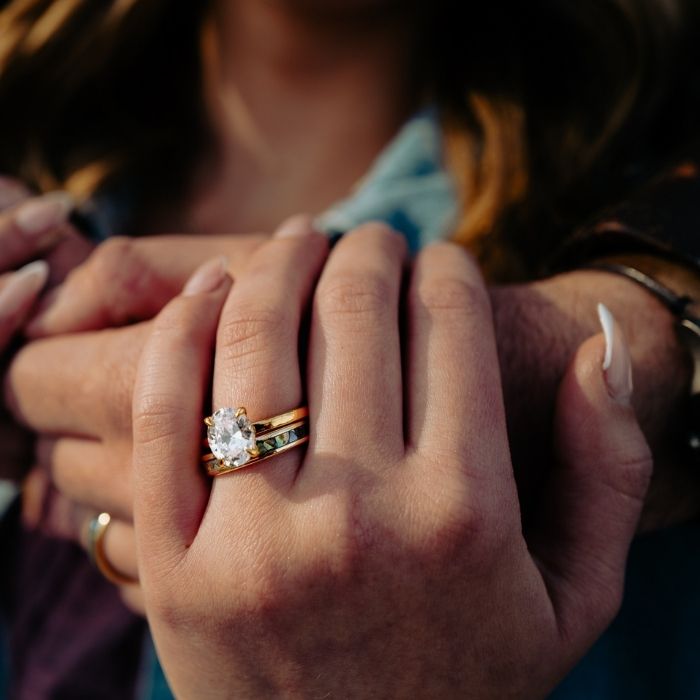
This is one of the most common questions we get, and for good reason. An engagement ring is something you’ll wear every day, not just on special occasions. The last thing you want is a ring that constantly catches on sweaters, hair, blankets, or pockets.
The short answer is yes, any ring can snag. The more important question is why it snags and how design choices affect that.
Let’s break down what actually causes rings to snag, which designs are more prone to it, and how we design rings to be comfortable and practical for everyday life.
What Does “Snagging” Really Mean?
When someone says a ring snags, they’re usually talking about one of a few things:
- Fabric getting caught on prongs
- Hair pulling when running fingers through it
- The ring catching on pockets, bedding, or knit materials
- Feeling like the ring is “in the way” during normal hand movement
Snagging is rarely about the stone itself and much more about the stone’s shape and how its edges interact with the world around it.
Stone Shape Is the Biggest Factor
This is the part that doesn’t get talked about enough.
Most people immediately focus on setting the stone as low as possible, but changing a stone’s height by a few millimeters does not usually make a meaningful difference in snagging. What matters far more is whether the stone has sharp points or soft, rounded edges.
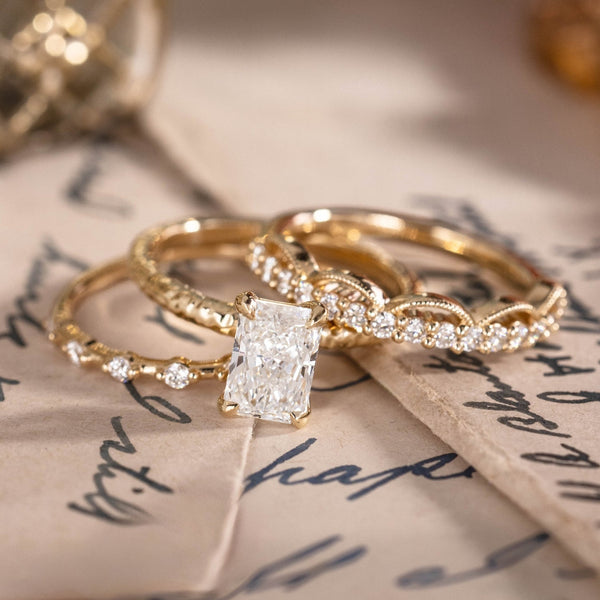
A ring with a slightly higher, rounded stone will often snag less than a lower-set ring with sharp points. Shape dictates how easily fabric and hair can slide past the ring or get caught. The Marcelline (Emerald-Cut), The Sidney (Oval) &
The Brooklyn (Cushion)
The Marcelline (Emerald-Cut), The Sidney (Oval) &
The Brooklyn (Cushion)
Rounded Stone Shapes Tend to Snag Less
Stones with softer outlines are generally more forgiving for everyday wear.
These include:
- Round
- Oval
- Cushion
- Asscher
- Emerald cut, to a degree
These shapes don’t have aggressive points sticking out, and their edges tend to transition smoothly into the setting. Even when they sit a little higher, fabric is more likely to glide over them instead of catching.

Pointed Stone Shapes Require More Thought
Shapes with sharp tips or corners are naturally more prone to snagging.
These include:
Even when these stones are set low, the pointed geometry still exists. Lowering the stone slightly does not eliminate those catch points.
That does not mean these shapes are bad choices. It just means the design around them matters more.
Prongs and Stone Shape Go Hand in Hand
Prongs are still one of the most common causes of snagging, but their impact is amplified by stone shape.
Pointed stones almost always require prongs at the tips, and those prongs need to be designed carefully. Long, thin, or aggressive prongs at sharp points are a recipe for snagging.
For pointed shapes, we often recommend:
- Protective prongs that fully cap the point
- Slightly heavier prongs for durability
- Rounded or softened prong profiles
- Designs that tuck the point inward rather than leaving it exposed
When prongs are finished correctly, they are bent and polished smooth over the stone. They should not feel sharp or catch easily, regardless of shape.
The Liora (Pear-Shaped) The Vivienne (Emerald-Cut) Custom (Elongated Cushion)

Bezel Settings and Stone Shape
Bezel settings are one of the most snag-resistant options, especially for pointed or angular stones.
Because the metal surrounds the stone:
- Sharp points are protected
- Edges are softened
- There are fewer places for fabric to catch
A marquise or pear in a bezel will almost always snag less than the same stone in traditional prongs, regardless of how low it sits.

Band Width and Shape Still Matter
The band itself also affects how a ring feels day to day.
Very thin bands can:
- Make the ring feel top-heavy
- Allow more movement and twisting
- Increase the chance of catching on things
A slightly thicker band adds stability and helps the ring sit comfortably, which indirectly reduces snagging.
Rounded band profiles are also more comfortable than sharp, flat edges for everyday wear.

Side Stones and Accent Details
Accent stones can snag if their shapes and settings are not integrated smoothly.
Common trouble areas include:
- Exposed shared prongs
- Very pointy accent stones
- Sharp transitions between stones and band
This doesn’t mean accent stones should be avoided. It just means their shapes and placement need to flow naturally into the design.
How Lifestyle Impacts Shape Choices
Your lifestyle plays a big role in how noticeable snagging will be.
If you:
- Work with your hands
- Wear knits or gloves often
- Have young kids
- Are active day to day
Rounded stone shapes or protected pointed shapes tend to be better long-term choices. If your lifestyle is lower impact, you have more flexibility, but smart design still matters.

Why New Rings Sometimes Snag at First
Even well-designed rings can feel snaggy when they’re brand new.
This is usually because:
- Prongs are freshly finished
- Edges haven’t had time to naturally wear smooth
- You’re still adjusting to wearing the ring
Most rings feel smoother after a short break-in period. Persistent snagging is a sign something needs adjustment.
Maintenance Makes a Difference
Over time, even the best-designed ring can start snagging if it’s not maintained.
Prongs can lift, settings can shift, and edges can wear unevenly. Regular inspections and occasional polishing keep everything smooth and secure.

Custom Design Lets You Design Around Snagging
This is one of the biggest benefits of going custom.
Instead of just lowering a stone and hoping for the best, we design around:
- Stone shape
- Orientation on the finger
- Prong style
- Protective elements
- Overall profile and balance
That approach leads to rings that look intentional and wear comfortably.
The Bottom Line
Any ring can snag, but stone shape plays a much bigger role than most people realize.
A few millimeters of height change will not eliminate snagging if the stone has sharp points. Thoughtful choices around shape, prongs, and protection make a far bigger difference.
The goal is not just a ring that looks good in photos, but one that feels good on your hand every single day.
If snagging is something you’re concerned about, it’s an easy thing to plan for early, and we’re always happy to talk through options.
Explore our collection of unique engagement rings or design your own custom engagement ring with our team. Schedule a free consultation with us today virtually or in-person at our Huntersville location (a suburb of Charlotte, NC).